

Senior Executive Leadership Program—Middle East
Program Overview: Senior Executive Leadership Program—Middle East
The Senior Executive Leadership Program—Middle East (SELPME) from Harvard Business School Executive Education is designed for experienced executives who are ready to expand their strategic perspective and lead with greater impact in an increasingly complex global business environment. Through immersive modules in Istanbul and at the HBS campus in Boston, you will strengthen your ability to navigate uncertainty, make bold strategic decisions, drive innovation, and create long-term value for your organization.
Combining the renowned HBS case method with executive coaching, collaborative peer learning, and a Value Mapping Strategy Project, the program provides practical frameworks you can apply to real business challenges. You will also explore how emerging technologies, including generative AI, are reshaping marketing, technology strategy, organizational structures, and competitive dynamics, equipping you to lead digital transformation with greater strategic insight.
Key Takeaways
Deepen your understanding of the most pressing issues facing today’s leaders in the Middle East and beyond.
Capitalize on digital transformation, including AI.
Become a more agile leader and refine your negotiation skills.
Seize growth opportunities and compete successfully in a complex global economy.
Foster innovations that deliver value to customers and drive corporate success.
Align your company's operations to achieve strategic objectives and deliver value to customers.
Expand your ability to define, measure, and monitor performance.
Lead authentically and ethically at all levels and foster a culture of accountability across the organization.
Who Is the Senior Executive Leadership Program—Middle East For?
The Senior Executive Leadership Program—Middle East (SELPME) is designed for experienced senior executives who are general managers or functional leaders preparing to take on greater responsibilities or drive new growth initiatives. It is particularly well-suited for leaders working in the Middle East or with regional partners who want to sharpen their management and leadership skills in a complex and evolving business environment. Participants typically have more than 10 years of experience and may come from a wide range of organizations.
Participants typically include:
Senior executives, functional leaders, and general managers with 10+ years of work experience
Leaders preparing to assume new responsibilities or spearhead growth initiatives
Executives from organizations that have achieved success in the Middle East, whether independently or with regional partners
Leading in the Age of AI

Generative AI in Business
Explore how generative AI is transforming marketing while examining what it takes for AI to deliver meaningful value for organizations and the people they serve.

Enterprise AI Strategy
Examine how organizations build, scale, and lead enterprise AI capabilities through cases exploring AI-first business models, technology strategy, and AI adoption across large organizations.

AI, Competition, and Digital Ecosystems
Analyze how AI is influencing competitive dynamics, platform ecosystems, and market strategy through discussions on digital competition and the evolving role of AI in business.

Leading Organizations in the AI Era
Discuss how AI may reshape organizational structures while exploring the opportunities, responsibilities, and societal considerations senior leaders must navigate in an AI-enabled world.
A Leadership Journey Built For Impact
What You Will Learn in the SELPME Program
Leading and Competing in the Global Economy
Interpret global macroeconomic indicators to inform strategic decision making
Analyze geopolitical shifts, institutional strengths/weaknesses, and global industry evolution and their impact on competitive advantage
Determine where to compete and design global operating models for expansion, localization, and integration
Evaluate supply chain, labor, and capital market dynamics using Business, Government & the International Economy (BGIE)
Examine global trade rules, investment flows, and cross-border strategy using BGIE analytical tools
Strengthen global leadership effectiveness through communication and cross-cultural management
Negotiations and Dealmaking
Apply principled negotiation frameworks to expand value and manage conflict effectively
Navigate multiparty, cross-cultural, and asymmetric information deal environments
Develop systematic processes for preparing, executing, and evaluating negotiations
Leverage simulations to test tactics and improve negotiation agility
Balance value creation with long-term relationship management in strategic deals
Value-Based Strategy
Design compelling value propositions aligned with customer needs, market demand, and sources of long-term advantage
Apply competitive positioning, industry structure analysis, and scenario planning to guide strategic direction and anticipate competitive shifts
Strengthen decision making using financial analysis and strategic-finance frameworks, including assessing the valuation impact of major initiatives, acquisitions, and divestitures
Communicate strategic priorities effectively to align corporate, business unit, and functional strategies for cohesive value creation
Build and sustain enterprise-wide value creation by strengthening systems that support innovation, execution, and organizational learning
Innovation and Design Thinking
Use design-thinking tools to uncover customer needs and prototype high-value solutions
Analyze disruptive innovations, and assess their impact on industries and business models
Build organizational systems that encourage experimentation and continuous learning
Evaluate strategies to scale innovation while maintaining operational discipline
Foster a culture that supports creativity and cross-functional collaboration
Performance Management
Design strategic dashboards, performance metrics, and reporting systems aligned with enterprise goals and long-term priorities
Evaluate and align organizational structures, talent systems, incentives, and communication mechanisms to drive clarity, agility, and enterprise-wide performance
Strengthen accountability and governance through transparent performance management and cross-functional coordination
Assess strategic resource allocation and capability-building decisions to support operational excellence and sustained performance
Apply insights from HBS cases to enhance corporate performance and decision making across business cycles
Leadership and Corporate Accountability
Apply leadership and corporate accountability frameworks to analyze complex leadership dilemmas involving ethics and risk
Balance stakeholder expectations while upholding organizational values and governance
Develop systems that reinforce transparency, accountability, and responsible leadership
Reflect on leadership authenticity, values, and personal purpose
Strengthen your ability to lead responsibly in moments of pressure and ambiguity
Digital Transformation
Assess the implications of AI, automation, and data-driven technologies on business models
Evaluate digital ecosystems, platforms, and network-based competitive dynamics
Lead digital transformation initiatives that enhance customer value and agility
Develop technology strategies aligned with long-term organizational priorities
Manage the organizational challenges associated with digital innovation and adoption
Leading Transformational Change
Understand the behavioral and structural barriers that impede change
Design holistic transformation strategies integrating people, culture, and systems
Lead through ambiguity by mobilizing commitment and aligning stakeholders
Apply change management frameworks to sustain momentum and achieve outcomes
Build organizational resilience to navigate continuous disruption and renewal
Entrepreneurship in a Global Context
Evaluate how institutional environments, capital markets, and regulatory systems influence entrepreneurial strategy
Use opportunity identification frameworks to assess unmet needs and build scalable business models
Explore cross-border venture growth and the challenges of entering emerging and mature markets
Analyze country-level risks, timing, and competitive dynamics affecting global ventures
Apply case-based insights to understand how founders navigate uncertainty and create enduring value
Value Mapping Strategy Project
Apply your learning to a strategic challenge facing your organization through an individual Value Mapping Strategy Project. By evaluating value from the customer's perspective, assessing your competitive positioning, and refining your strategic approach, you will develop an actionable plan to strengthen organizational performance and create lasting value.

Executive Coaching
Accelerate your leadership development through integrated executive coaching and a 360-degree leadership assessment. Working closely with a professional coach, you will gain deeper insight into your leadership strengths, identify areas for growth, and develop a personalized action plan to enhance your effectiveness as a senior leader.
Why Harvard Business School Executive Education?

In-Region Experience
Experience immersive learning in both Istanbul and at the HBS campus in Boston.

Networking
Build lasting relationships with accomplished senior leaders across industries, functions, and global markets.

Accommodations at HBS
Stay on or near the HBS campus during the Boston module for a fully immersive learning experience.

Academic Resources at HBS
Access Harvard Business School’s academic environment, learning resources, and world-renowned case-based learning experience.

Fitness at HBS
Enjoy access to select fitness and wellness facilities during your time on the HBS campus.

Dining at HBS
Experience dining and hospitality designed to support learning, networking, and community engagement throughout the program.

Other HBS Campus Features
Immerse yourself in the collaborative and intellectually stimulating environment of the Harvard Business School campus.
HBS Alumni Status
Join a global community of successful executives. Your HBS experience continues to deliver benefits long after the program ends. Graduates of the Senior Executive Leadership Program—Middle East become alumni of Harvard Business School, joining a network of highly accomplished executives. As a lifetime member of the HBS alumni community, you will be able to:
Tap into a global resource of more than more than 85,000 MBA and HBS Executive Education alumni in over 160 countries
Connect with members of 93 HBS alumni clubs and associations worldwide at business, learning, social, and community service events
Access our vast database of management content and thought leadership assets at Baker Library/Bloomberg Center Services
Stay in touch with a lifelong HBS email forwarding address
Access our exclusive portal to support your career transitions
Take advantage of alumni-only coaching and career development opportunities, including tools for polishing your resume and networking
Receive a 20 percent discount on regularly priced items, including HBS Press books, Harvard Business Review article reprints, and case studies
Enjoy a 30 percent discount on our open-enrollment offerings
Career Impact: How SELPME Can Shape Your Next Chapter

Hear from Our Participants
"The skills I developed are embedded in how I run my business today, in how I structure major negotiations, how I engage with government partners, and how I lead the people responsible for delivering our next phase of growth."
—Sibusiso Mvelase, program participant
Abdulrahman Alkanhal
Vice President, The Royal Court of the Kingdom of Saudi Arabia, Saudi Arabia
My biggest takeaway was the importance of culture in an organization. If you do not have a strong culture, no matter how much you micromanage and watch people, you cannot achi...
Muna Batayneh
Director of Operations, Engineering Enterprise Company, Iraq
This program has enhanced my ability to manage the human resource side of things, and my ability to attract and retain talent, in particular, has grown. I feel equipped to dev...
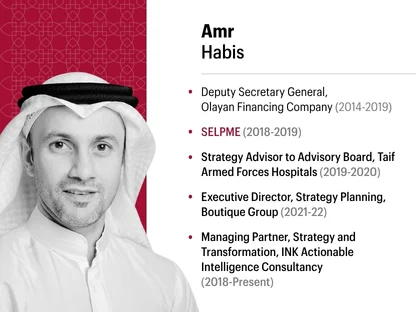
Amr Habis
Deputy Secretary-General, Olayan Financing Company, Saudi Arabia
Through the first module, I’ve already gained valuable strategies for driving growth in my region’s unique economy. I’ve also learned that by looking at the big picture, I can...
Jad Karam
Chief Executive Officer, Sarooj Construction Company, Oman
The professors had a profound impact on my approach to business in general, and my company in particular. They taught me to see through the seemingly chaotic and complex situa...
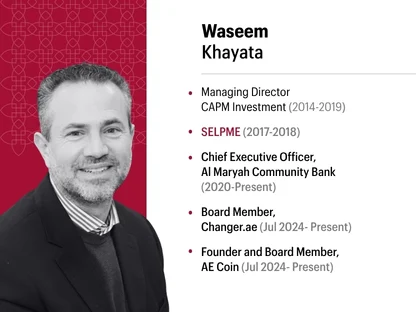
Waseem Khayata
Managing Director of Investment, Finance House, Dubai
Two things: First, I wanted exposure to the latest information on various aspects of accounting and economics, and second, I wanted to enhance my time management and decision-...
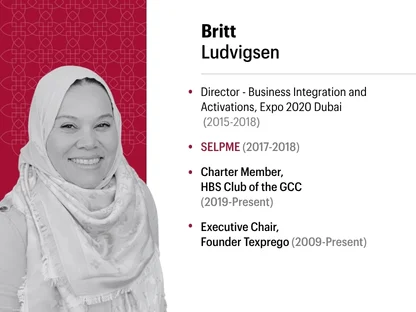
Britt Ludvigsen
CEO and Founder, Texprego, Bangladesh
Before joining SELPME, I was focused on running my business. Now, I’m thinking bigger than ever
Zoya Sakr
Co-Founder and Group Editor in Chief, Online Lifestyle Network (OLN), UAE
There were some weaknesses that I needed to overcome in order to become a better leader. I was in my comfort zone, using the same old management techniques, and I wanted to de...
Past Participant Profiles
Job Titles
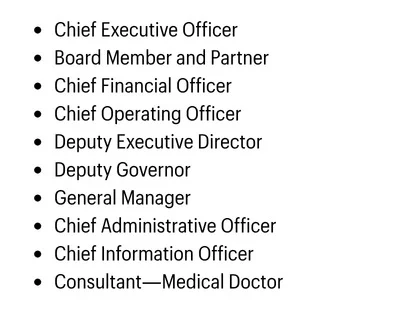
*Partial list
Countries
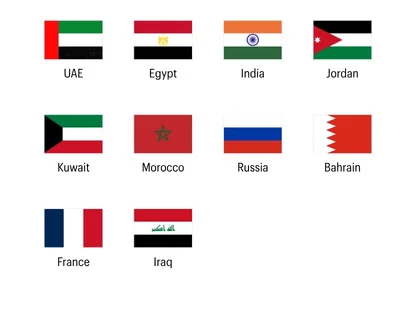
*Partial list
Where Past Participants Come From











Faculty
Tarun Khanna is the Jorge Paulo Lemann Professor at Harvard Business School. For almost three decades, he has studied entrepreneurship as a means to social and economic development in emerging markets. At HBS, he has taught courses on strategy, international business, and economic development to undergraduate and graduate students and senior executives.
Tarun Khanna
Faculty Chair
Additional Faculty

Dennis W. Campbell
Dwight P. Robinson, Jr. Professor of Business Administration
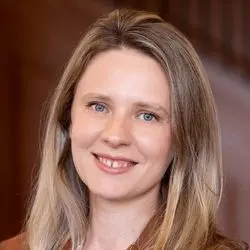
Chiara Farronato
Glenn and Mary Jane Creamer Associate Professor of Business Administration

C. Fritz Foley
André R. Jakurski Professor of Business Administration

Linda A. Hill
Wallace Brett Donham Professor of Business Administration

Nien-Hê Hsieh
Professor of Business Administration, Joseph L. Rice, III Faculty Fellow

Rebecca A. Karp
Assistant Professor, Strategy Unit

Kevin P. Mohan
Senior Lecturer of Business Administration

Sophus A. Reinert
T.J. Dermot Dunphy Professor of Business Administration

Meg Rithmire
F. Warren Mcfarlan Associate Professor of Business Administration

James K. Sebenius
Gordon Donaldson Professor of Business Administration

Debora L. Spar
MBA Class of 1952 Professor of Business Administration

Suraj Srinivasan
Philip J. Stomberg Professor of Business Administration

Jorge Tamayo
Assistant Professor of Business Administration

Stefan H. Thomke
William Barclay Harding Professor of Business Administration

Michael L. Tushman
Baker Foundation Professor, Paul R. Lawrence MBA Class of 1942 Professor of Business Administration
Note: The faculty list is subject to change.
Program Timeline
Date | Location | |
|---|---|---|
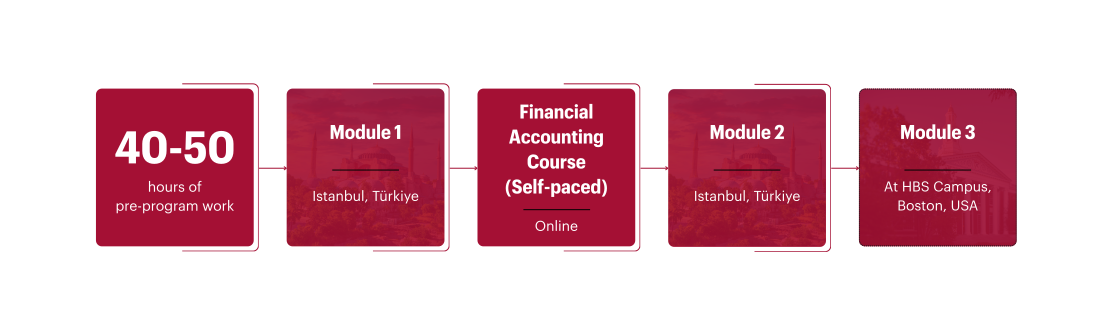
Module 1 | December 6 – 18, 2026 | Istanbul, Türkiye |
Module 2 | April 11 – 23, 2027 | Istanbul, Türkiye |
Module 3 | August 23 – September 3, 2027 | HBS Campus, Boston, US |
Participants should expect to spend approximately 40-50 hours on self-paced case preparation prior to attending Module 1 of the program. Case materials will be made available approximately two weeks prior to the start of the program.
Note: The program fee covers tuition, books, case materials, accommodations, and most meals.
Application Deadlines
Round 1
Round 2
Round 3
Round 4
Please note that admissions to the program are evaluated on a rolling basis. We strongly recommend that interested participants apply early.
FAQs
What is the Senior Executive Leadership Program—Middle East at Harvard Business School?
The Senior Executive Leadership Program—Middle East (SELPME) is a comprehensive business management program offered by Harvard Business School Executive Education. This executive training is designed to prepare leaders for the evolving business landscape in the Middle East, where countries are diversifying their economies and encouraging new industries.
The Senior Executive Leadership Program—Middle East is taught through a series of modules offered in Boston and Istanbul. The program helps executives become more capable leaders who can deliver value in a global context, drive innovation, and build accountable, high-performance organizations. Participants engage with the hallmark HBS case method, complete a Value Mapping Strategy Project, and receive executive coaching throughout the program.
How much does the Senior Executive Leadership Program—Middle East at Harvard Business School cost?
The Senior Executive Leadership Program—Middle East (SELPME) has a program fee of US$85,000 plus VAT. This investment in executive training includes access to world-class HBS faculty, learning experiences across international locations, executive coaching, and a lifetime membership in the Harvard Business School alumni community with its extensive benefits and networking opportunities.
Is the Senior Executive Leadership Program—Middle East at Harvard Business School hard to get into?
The Senior Executive Leadership Program—Middle East (SELPME) has specific eligibility requirements that ensure participants can maximize the value of this executive training. The program requires a minimum of 10 years of work experience, and participants should hold senior executive, functional leadership, or general management roles with experience working in the Middle East or with regional partners. The program is designed for leaders from various organizations, including large established companies, entrepreneurial ventures, family businesses, multinational firms, nonprofit organizations, and government agencies.
How long is the Senior Executive Leadership Program—Middle East at Harvard Business School?
The Senior Executive Leadership Program—Middle East (SELPME) spans nine months with a unique format that maximizes learning and the development of a global perspective while minimizing consecutive days away from the office. The program consists of three in-person modules requiring just six weeks total away from the office over the course of the nine-month duration. Modules 1 and 2 will take place in Istanbul for four weeks, Module 3 is at the HBS campus in Boston, United States, for two weeks. This thoughtfully designed training schedule allows senior executives to maintain their professional responsibilities while participating in this comprehensive leadership program across one in Boston and two in Istanbul.
Are executive leadership programs worth it?
The Senior Executive Leadership Program—Middle East (SELPME) offers significant value through its comprehensive approach and long-term benefits. Key takeaways from this program include strategic thinking and competitive advantage skills, innovation leadership capabilities, authentic and ethical leadership development, enhanced decision making and negotiation confidence, and a valuable peer network spanning functions, industries, and countries. The training also provides Harvard Business School alumni status with lifetime membership benefits, access to a global network of 85,000+ MBA and HBS Executive Education alumni in 160+ countries, access to 93 HBS alumni clubs and associations worldwide, ongoing career development and coaching opportunities, and discounts on HBS resources and future programs. The combination of world-class faculty, the proven HBS case method, international exposure, executive coaching, and lifelong alumni benefits makes the Senior Executive Leadership Program—Middle East a substantial investment in leadership development and career advancement.
Is this program worth the investment? What ROI can I expect?
The Senior Executive Leadership Program—Middle East is designed to help experienced executives strengthen their strategic judgment, broaden their global business perspective, and navigate complex leadership challenges. Through the HBS case method, executive coaching, immersive learning, and a Value Mapping Strategy Project, you will gain practical frameworks that can be applied to strategic priorities within your organization. Upon completion, you will also join the Harvard Business School alumni community, gaining access to lifelong learning resources and a global network of accomplished executives.
Can I manage this program alongside a full-time job?
Yes. The program follows a modular format designed for working executives, requiring six weeks away from the office across three in-person modules in Istanbul and at the Harvard Business School campus in Boston. Between modules, you will continue your learning through activities such as the Value Mapping Strategy Project and a self-paced financial accounting course.
Am I the right fit for this program?
The program is designed for experienced senior executives, general managers, and functional leaders who are assuming broader responsibilities or driving growth initiatives. It is particularly suited to leaders whose organizations operate in the Middle East or work with regional partners and who want to strengthen their ability to lead in an increasingly complex business environment.
What support is available for fees? Are there EMI or sponsorship options?
Many participants receive sponsorship from their organizations as part of their executive development initiatives. If you are self-funding, you can speak with a program advisor to discuss available payment options and identify an approach that best suits your needs.
What will I actually learn—and how practical is it?
The curriculum explores global strategy, negotiations, value-based strategy, innovation, digital transformation, performance management, leadership, and organizational change. Learning is highly applied through the HBS case method, executive coaching, collaborative peer learning, simulations, and a Value Mapping Strategy Project focused on a strategic challenge within your own organization.
What certification will I receive, and how is it valued?
Upon successful completion of the program, you will become part of the HBS alumni community, joining a global network of accomplished executives and gaining access to exclusive lifelong learning resources. Please contact an enrollment advisor for the latest information regarding the credential awarded upon successful completion.
Are all the sessions live, and will I get access to recordings?
The program is delivered through immersive, in-person modules in the Middle East and at the HBS campus in Boston. For the latest information about the learning experience and participant resources, please speak with an enrollment advisor.
What happens if I fall behind or miss deadlines?
The program combines immersive in-person learning with activities completed between modules. If you anticipate missing a session or require additional support, you should contact the program team as early as possible to discuss the options available.
Will this program help me transition into a new role or industry?
The program is designed to strengthen the capabilities required for broader executive leadership responsibilities rather than prepare participants for a specific role or industry transition. The knowledge and perspectives gained can support leaders as they navigate new challenges, expanded responsibilities, and evolving business environments.
What is the application process, and how selective is the program?
To apply, you must complete and submit an online application. Applications are reviewed to assess alignment between the program and the applicant's professional experience and leadership responsibilities. The brochure does not publish acceptance rates or admissions selectivity. An enrollment advisor can guide you through the application process and eligibility requirements.
How does Emeritus support accessibility for learners?
Emeritus is committed to making high-quality education accessible and affordable to individuals, companies, and governments around the world. If you have questions about accessibility or would like to discuss available support options before enrolling, please contact accessibility@emeritus.org. For more information about our accessibility practices, please review our Accessibility Policy here.
Connect With an Emeritus Learning Advisor for a 1:1 Session
Email: hbs_selpme@emeritus.org
Phone: UAE +971 80 0088601089 | US +1 315 667 1897 | UK +44 1233 225154 | LATAM +52 55970 70428 | SG +65 3129 8406 | India* +000 8009191947
*If you are dialing the India number, please make sure to include the first three zeros (000).
We encourage early application due to limited cohort capacity.
Starts on